
Pakistan Missile Technology Ranking
The situation with the missile technology of Pakistan (Pakistan Missile Technology Ranking) has become one of the main points of the discussion regarding the strategic stability and defence capability in the South-Asian region. It has managed to transform a lot over the decades due to the technological progress, the security needs of the region, and continuous modernization of the military. To policymakers, analysts, and defense observers, such a ranking is important in assessing the deterrence posture as well as the long-term strategic ambitions of the country.
The technology of missiles is the focus of military defense strategies. The development of missiles in the situation of Pakistan is closely related to the credible deterrence in the geopolitical environment. Beginning with the short-range battlefield systems to the long-range ballistic missiles, the technological advancements are also apparent through the country’s inventory in defense priorities.
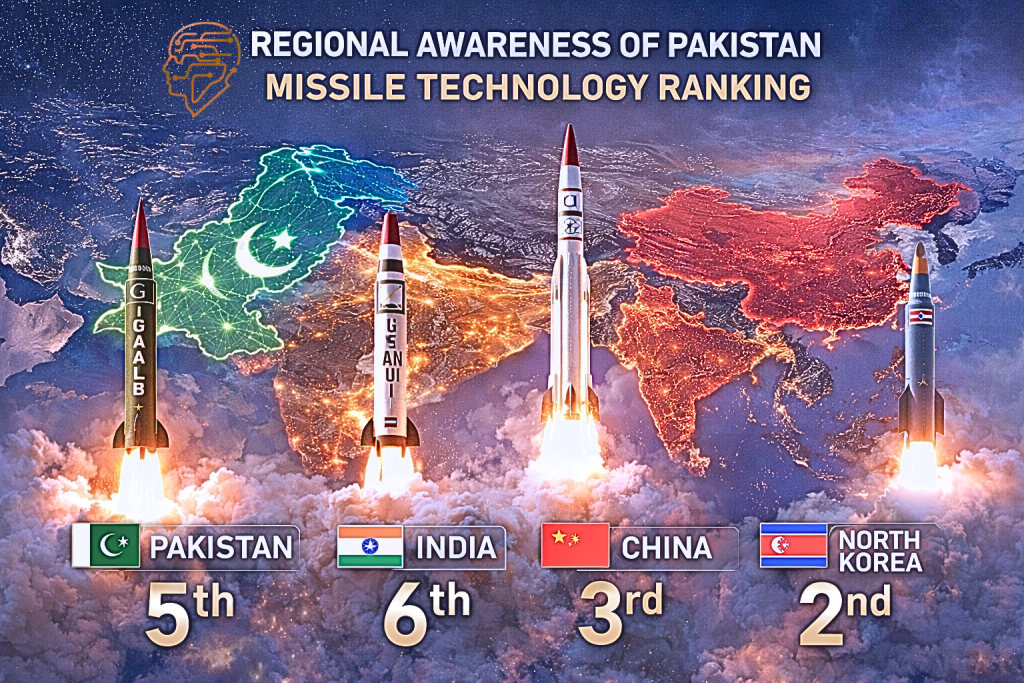
Regional awareness of Pakistan Missile Technology Ranking
The best way to understand the position of Pakistan in terms of missile technology is to understand the regional and global security situation. South Asia is also among the most strategically sensitive regions of the world, mostly due to nuclear armed neighbours and long unresolved political tensions.
The comparisons of capabilities made by analysts may include India, China, and the United States. Those countries certainly have different levels of developed missile technologies, but the positioning of Pakistan speaks of a narrow-minded strategy of minimum deterrence credibility instead of world power projection.
The missile systems of Pakistan are mostly divided into short, medium, and intermediate ballistic missiles, as well as stationary cruise missiles of cruise. These systems are meant to maintain strategic balance of the region. Instead of going global against the super powers, it focuses on being at par with those in its immediate security setting.
Analysts often refer to the missile technology ranking of South Asian nations as an indicator of how well the nation has managed to create home grown capability despite the limitations in its economies and technology.
It is important to discuss the maximum missile range of Pakistan in terms of rankings of its missile technology. The range is one of the most important indicators of strategic reach of a country, and the possibility to access targets of a long distance contributes to enhancing the credibility of deterrence and defines the geopolitical relations.
The Shaheen-III some 2,750km is the longest-range operational ballistic missile in Pakistan. This has a range that encompasses major areas of the region as well as one of the milestones in the development of missiles in the country.
The significance of range is that range determines the military capability as well as the strategic depth. Expanded range improves the ability of the strike on a second strike and extends defensive possibilities, increasing the rating of the Pakistani missile technology.
The development of long-range missiles requires sophisticated guidance, propulsion, design of re-entry vehicles and reliable command and control. Pakistan has made massive investments in these areas in order to enhance reliability and accuracy.

Ghauri Missile Range and Its Value in Pakistani Missile Technology Ranking
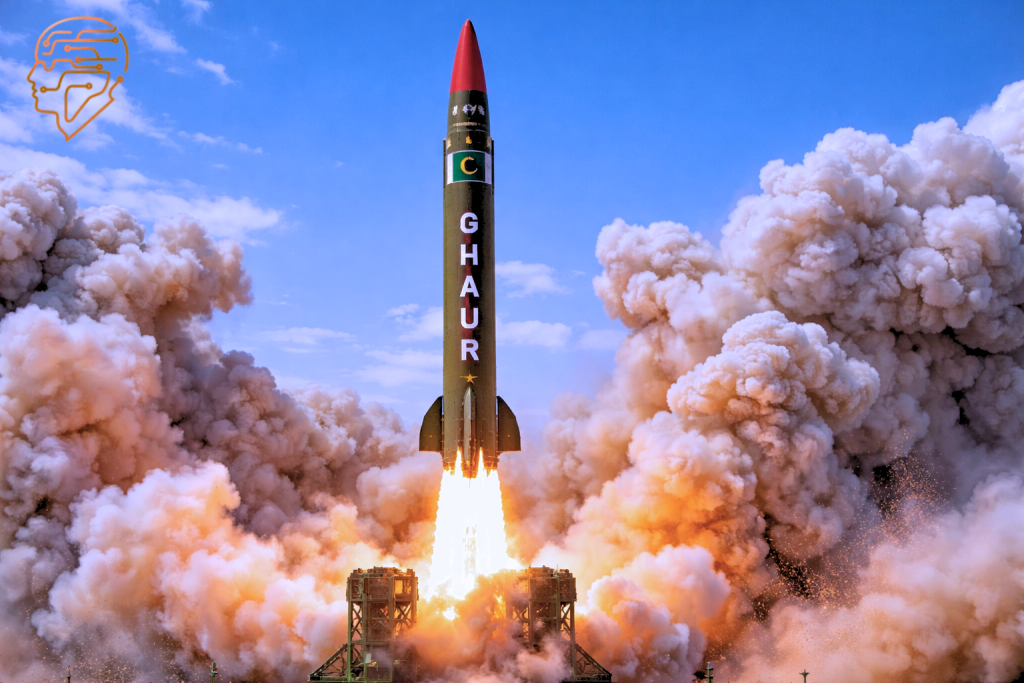
Pakistan had its first medium-range ballistic missiles, the Ghauri missile and with a range of approximately 1,300 km, this missile contributed a lot to its initial missile ranking.
The Ghauri demonstrated to the world that Pakistan was capable of rolling out strategic systems by hitting targets beyond its borders. It was a revolution when it was introduced into the country forces.
Once the Ghauri had been tested and implemented, Pakistan ceased the use of short-range tactical into the more sophisticated medium-range systems, and this enhanced its missile ratings. The Ghauri is an important milestone though subsequent systems were better and more advanced.
There was a Ghauri, based on liquid-fuel propulsion, which requires higher preparation than solid-fuel. Its development, however, left a foundation on how it will develop propulsion, guidance and payload integration in the future | Pakistan Missile Technology Ranking
Pakistan Missile Technology Ranking and ICBM Missile Pakistan Debate
The ICBM is a missile that has a range of more than 5,500km and controversies surrounding the ICBM program in Pakistan are usual when it comes to the ranking of its missiles.
This is a question that is raised particularly when one compares Pakistan to the world missile powers. According to public information, Pakistan does not have a proclaimed ICBM that would have a range longer than 5,500km.
Pakistan is a strong regionally ranked country despite the fact that it does not have an ICBM. However, it does not have a global deterrence strategy but regional deterrence strategy.
It will take several rockets in stages, sophisticated guidance, and re-entry automobiles capable of enduring high temperatures in space to construct an ICBM. Although Pakistan has advanced missile technology, it has focused on medium and intermediate range technology.
The ICBM debate highlights the difference between the global proliferation and local prevention efforts.
Pakistan needs to be judged on rankings based on doctrine and intent and not just figures of range.
Developments in Pakistan Missile Test and Pakistan Missile Technology Ranking
Every missile test helps to improve the ranking of Pakistan in terms of technology proving the technical improvement of the technology and its operational readiness. The frequent testing makes it necessary to maintain a plausible deterrent.
Range, impact point and technical objectives are described in official announcements which are typically through Inter Services Public Relations. This kind of transparency enhances deterrence messages.
The reliability, accuracy, and system integration are each confirmed in every test, supporting the ranking of technology. Periodic reviews discover technical problems and enhance performance.
Tests are indicative to the local and foreign audiences. At home, they enhance trust in the defense capabilities; at home, they show the strategic preparedness and development of technologies | Cyber Crime
Missile development and deployment are normally managed by such institutions as the Strategic Plans Division that coordinates the assets and ensures command-and-control.
Strategic Factors that affect Pakistan Missile Technology Ranking.
Various strategic parameters determine Pakistan Missile Technology Ranking such as the challenges in the region, technological advancements, military budgets and the global missile-control regimes.
Other major considerations are survivable second-strike capability and greater accuracy. The modern missile systems are dependent on mobility, solid fuel propulsion, and sophisticated guidance.
These dynamics ensure that the responsibility of the ranking of Pakistan combats the dynamics of security issues. An example is that, the development of worldwide missile-defenses requires constant enhancements in penetration assists and maneuverable re-entry vehicles.
The incorporation of the cruise missile technology is important as well. Cruise missiles provide low-altitude and are precision-delivered and supplement the ballistic systems as part of the greater deterrence system | Pakistan Missile Technology Ranking
Modernization and Technological Change.
The modernization of missile systems has continued to increase the technology level of Pakistan. Previously, it had to rely on imports and minimal local research but with continued investment in domestic institutes self-reliance has increased.
Solid-fuel propulsion makes a great advance over previous liquid systems, allowing it to be ready to launch much quicker, with much more stable store, and more survivable. Guidance systems have also improved and they have combined advanced navigation in order to increase the accuracy.
Another important factor is mobility. By putting preemptive strike vulnerability at a minimum, road-mobile launch platforms increase survivability by enhancing second-strike capacity the cornerstone of credible deterrence.
Regional Stability and Deterrence.
The Pakistani position in the missile technology table is closely related to the issue of regional stability because the deterrence is determined by the missile capability. The fact that a plausible deterrent increases the price of aggression increases the likelihood that the major conflict will not happen.
In South Asia, the elements influencing deterrence are the historical disputes and changing doctrines. The technology of missiles plays the role of a defense mechanism and a strategic indicator, and analysts indicate that balance allows avoiding the escalation.
In evaluating the technology status of Pakistan, keep in mind that the basis of deterrence is more than just range or payload. Survivability, command integrity and reliability are also essential. Important deterrence requires sophisticated hardware and professional doctrine of operation.
Prospects of Pakistan in terms of Missile Technology.
The development of technology, the evolution of regional security and military doctrine change will determine the place that Pakistan will occupy in the list of missile technology. The offensive missiles invented by Pakistan have to be advanced as the global missile-defense systems become more advanced.
The future rankings are hinged on the improved guidance accuracy, increased survivability, and speedy deployment. Performance can be improved by new technologies such as maneuverable re-entry vehicles and solid-fuel stages that are upgraded.
Altogether, the missile capability of Pakistan continues to develop and remains within the reasonable minimum-deterrence logic. The aim is to ensure that it is powerful enough to prevent attacks, without igniting unnecessary arms contests.
To put it briefly, the ranking indicates a sensitive strike with technologies benefits and strategic requirements. Based on the longest range of the missiles of Pakistan, the historic significance of the Ghauri, the controversies on the issue of ICBM, and the recent tests, each factor contributes to a more complete image of the country’s stance.
Therefore, the ranking is an active indicator of national defence, which is influenced by realities in a certain region, innovation, and long-term strategy.
Short Description of Pakistan Missile Technology Ranking
The position of the Pakistan missile technology can be said to represent the strategic position of the country and strength in defence within the tense South Asian context of security. In response to the years Pakistan has constantly improved its missile systems to maintain the credible minimum deterrence and assist the region to stabilize. The paper will focus on the evolution in the development of missiles in the country with reference to technological changes, modernization in the military and changing security needs.
The article emphasizes the longest-range missile of Pakistan Shaheen-III, capable of traveling approximately 2,750km, emphasizing the range of its strategy. It also talks about the Ghauri missile of approximately 1,300km range as a significant move toward developing medium range capability. The article is concerned with discussions of the ICBM ambitions of Pakistan, and it is clear that the country cannot focus its attention on the world power projection, but instead, regional deterrence remains at the center of its policy.
Bodies like the Inter-Services Public Relations announce regular missile tests which ensure that the systems are reliable, accurate and ready to operate. Another position of the Strategic Plans Division is to coordinate the strategic assets of the country, which is also described in the article.
In general, the article demonstrates the missile technology development in Pakistan as a dynamic measure of the level of technological advancement, long-term strategic plans, and national defense preparedness, conditioned by the realities of the region and strategic long-term security objectives.
Trending Queries About Pakistan Missile Technology Ranking
1. What is Pakistan Missile Technology Ranking?
Pakistan Missile Technology Ranking refers to the country’s position in terms of missile capability, range, technological advancement, and strategic deterrence within South Asia. It reflects Pakistan’s focus on credible minimum deterrence rather than global power projection.
2. What is the highest missile range of Pakistan?
The highest missile range of Pakistan is approximately 2,750 kilometers, achieved by the Shaheen-III ballistic missile. This allows Pakistan to cover key strategic areas within the region.
3. What is the range of the Ghauri missile?
The Ghauri missile has an estimated range of about 1,300 kilometers. It was one of Pakistan’s early medium-range ballistic missiles and played a major role in strengthening its deterrence capability | Pakistan Missile Technology Ranking
4. Does Pakistan have an ICBM?
According to publicly available information, Pakistan does not officially operate an Intercontinental Ballistic Missile (ICBM) with a range exceeding 5,500 kilometers. Its focus remains on regional deterrence.
5. Why is missile range important in Pakistan Missile Technology Ranking?
Missile range determines strategic reach and deterrence strength. Longer-range missiles improve second-strike capability and enhance regional security balance.
6. Who announces Pakistan missile tests?
Pakistan missile tests are usually announced by Inter-Services Public Relations, which provides details about range, impact point, and objectives.
7. What is the role of the Strategic Plans Division?
The Strategic Plans Division coordinates missile development, deployment, and ensures secure command-and-control of strategic assets.
8. What type of fuel does the Ghauri missile use?
The Ghauri missile uses liquid-fuel propulsion, which requires more preparation time compared to modern solid-fuel systems.
9. Why does Pakistan focus on regional deterrence?
Pakistan’s missile strategy is based on credible minimum deterrence. It aims to maintain strategic balance in South Asia rather than competing globally with major powers.
10. How do missile tests improve Pakistan Missile Technology Ranking?
Regular missile tests confirm system reliability, accuracy, and operational readiness. They strengthen deterrence credibility and demonstrate technological progress.
[…] However, in case you prefer a smaller three-row SUV to be used on a day to day basis with irregular trips, the Highlander is also one of the strongest SUVs of Toyota | Pakistan’s Missile Technology […]